Bleeding hydraulic brakes: when, why and what it costs
In short: Bleeding hydraulic brakes is needed when the bite point feels spongy, after a pad change, or every 1–2 years. Shimano uses mineral oil, SRAM/Magura DOT: never mix them. Workshop price per brake: approx. €25–40 including fluid.
Hydraulic disc brakes are precise, powerful and hard to beat in Berlin city traffic, but not maintenance-free. When the lever feels soft, spongy or "mushy", there's air in the system or the fluid is past its life. In this guide we explain the signs, the difference between mineral oil and DOT, what happens during a bleed and what it costs at our shop on Friesenstraße.
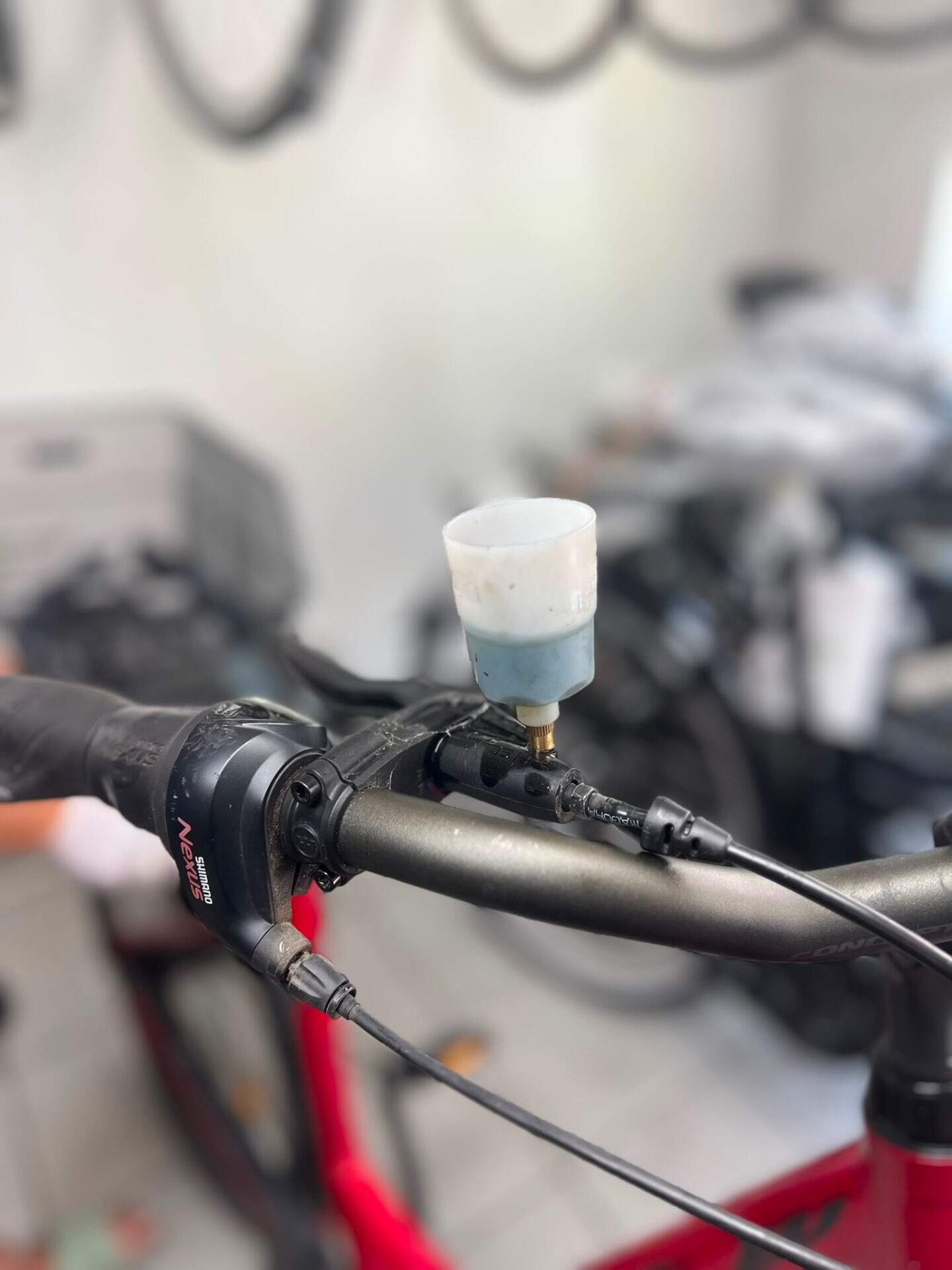
Brake lever pulling all the way to the bar?
Don't ride on. A brake without a bite point isn't a safety margin, especially dangerous downhill. Push the bike to us: Friesenstraße 24, Mo–Sa 9–21 Uhr.
Signs: air in the brake system
These symptoms almost always mean the brake needs bleeding:
- Brake lever feels soft or spongy
- No clear bite point: lever sinks slowly
- Lever pulls almost all the way to the bar
- Braking power drops even though pads are still good
- Bite point only appears after pumping several times
- After a crash or transport on a rear car rack
Mineral oil vs. DOT: what's in your brake?
There are two types of hydraulic brake fluid on bicycles; they are absolutely not mixable. Fill the wrong fluid and you ruin the seals.
| Brand | Fluid | Interval | Notes |
|---|---|---|---|
| Shimano | Mineral oil | every 2 years | Very long-lasting, no water absorption |
| Magura | Mineral oil (Royal Blood) | every 2 years | Special oil mandatory |
| Tektro | Mineral oil | every 1–2 years | Compatible with Shimano oil |
| SRAM / Avid | DOT 5.1 | yearly | DOT absorbs moisture |
| Hayes | DOT 5.1 | yearly | Needs more frequent service |
| Hope | DOT 5.1 | yearly | DOT system |
DOT brake fluid is hygroscopic: it pulls water from the air. Over time the boiling point drops, and on longer descents the brake can experience "fade" (bite point disappears with heat). Mineral oil is much more low-maintenance here.
What happens during a bleed?
- Fix the bike, remove wheels, take pads out and replace with the bleed block.
- Flush the system with fresh original oil: old fluid and air are driven out.
- Pump caliper and lever several times, dislodge remaining air bubbles as you go.
- Attach a syringe at the lever, press oil through the system under light pressure.
- Check the bite point, re-adjust if needed until it's crisp and firm.
- Refit the pads, install the wheel, test-brake.
The difference is instantly noticeable: a clear, direct bite point instead of a spongy feel: the brake feels like it did on day one.
What does a bleed cost at our shop?
| Service | Price |
|---|---|
| Brake bleed (1 brake, incl. fluid) | from €35 |
| Both brakes bled | cheaper on request |
| Pad replacement (per wheel) | from €15 |
| Rotor truing | from €10 |
We exclusively use original fluid from the respective brand, no "no-name". Fixed price up front.
Which brakes we bleed
Shimano (all series), Magura MT2 to MT8, Tektro, SRAM Guide/Level/Code/Maven, Avid, Hayes and Hope. Always with the correct original fluid and matching adapters.
Frequently asked questions
How do I know my brake has air in it?
The lever pulls far to the bar, the bite point feels spongy or soft, or braking power has dropped despite new pads. Sometimes the bite point only appears after pumping the lever several times.
How often do hydraulic brakes need bleeding?
For mineral-oil systems (Shimano, Magura, Tektro) every 1–2 years. For DOT systems (SRAM, Avid, Hope) yearly, because DOT fluid absorbs moisture from the air and loses its boiling point over time.
May I mix mineral oil and DOT?
Absolutely not. The seals are only designed for one type: mixing destroys the whole brake system within a short time. Wrong fluid usually means: new brake.
Can I bleed the brake myself?
Doable with the original bleed kit, the right fluid and instructions, but error-prone. Wrong sequence, air in the system or wrong fluid make the brake unusable. For safety we recommend the workshop.
How long does bleeding take in the workshop?
Per brake 20–45 minutes depending on system. If you come by in the morning we often do it on the spot; otherwise book by phone or WhatsApp.
What does bleeding cost at your shop?
Per brake from €35 including original brake fluid. Both brakes together cheaper: just ask us directly for the fixed price.
Does your brake feel spongy?
Drop by: Friesenstraße 24, Berlin-Kreuzberg. Original fluid, fixed price up front. Over 750+ Google reviews, 5.0★. Mo–Sa 9–21 Uhr.
Related guides
Replacing a bicycle chain: when, why and what it costs
When it's time, how we measure wear, what it costs. Chain from €45 including fitting at BikeShop Friesen Kreuzberg.
Read guide „Replacing a bicycle chain: when, why and what it costs“Wheel truing: when is it needed and what does it cost?
Spot a wheel that needs truing, why it is not a DIY job and what it costs. Wheel truing from €45 in Kreuzberg.
Read guide „Wheel truing: when is it needed and what does it cost?“Bicycle squeaking: causes, diagnosis and quick fixes
Squeaking when braking, pedalling or coasting? Causes, what you can do yourself and when to visit the workshop.
Read guide „Bicycle squeaking: causes, diagnosis and quick fixes“